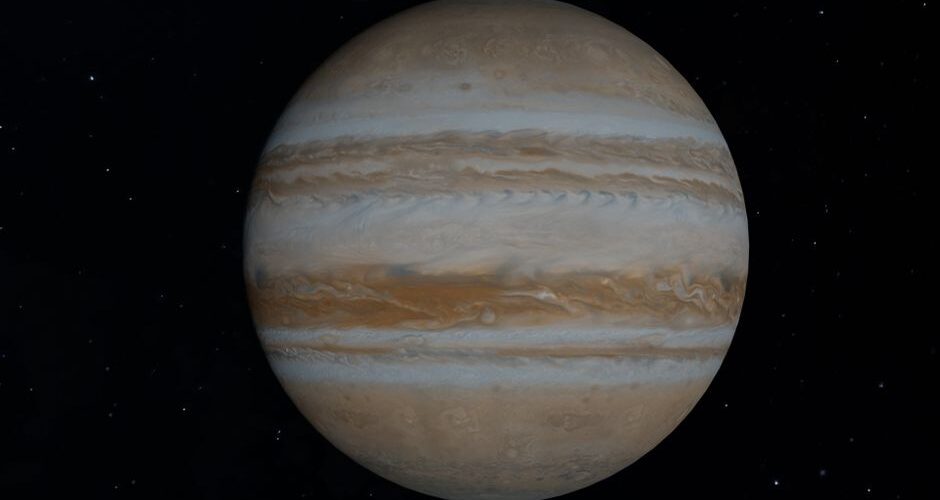
The Wandering Giants of the Cosmos
In the vast tapestry of our universe, some celestial bodies defy the expectations we have from stars and planets. Enter the rogue planets, those mysterious and solitary wanderers that drift through space with no fixed address. In 2026, astronomers are focusing their lenses on these elusive entities, attempting to unravel their secrets and understand their origins. Unlike typical planets, which orbit stars, rogue planets travel independently, having been ejected from their original star systems or having formed in the interstellar void. This year, the hunt for rogue planets is on, with powerful telescopes and satellites dedicated to tracking these cosmic loners.
How Do We Spot a Rogue Planet?
Spotting a rogue planet is no easy task. Without the glow of a nearby star to illuminate them, these planets are faint and elusive. However, astronomers have developed ingenious methods to detect them. One such technique is gravitational microlensing—a phenomenon that occurs when a massive object, like a rogue planet, passes in front of a distant star, temporarily magnifying and brightening the starlight. In 2026, projects like the Nancy Grace Roman Space Telescope are leading the charge, with the goal of identifying and studying these ghostly celestial bodies. Additionally, data from observatories worldwide is being pooled together to track their potential movements and paths across the cosmos.
Theories Abound: Origins and Characteristics of Rogue Planets
Theories about the origins of rogue planets are as varied as the planets themselves. Some scientists suggest that these planets were once part of a star system, only to be expelled due to gravitational interactions with other planets or stars. Others propose that rogue planets could form in isolation, born from the dense clouds of gas and dust in the interstellar medium. Recent studies in 2026 have even speculated about the potential for these planets to harbor life, particularly if they possess subsurface oceans heated by geological processes. While these are just theories, the prospect of life on rogue planets adds an exciting dimension to their study, challenging our understanding of habitability in the cosmos.
The Role of Advanced Technologies in 2026
Technological advancements in 2026 are playing a crucial role in unlocking the secrets of rogue planets. High-sensitivity infrared detectors, for instance, are crucial for identifying these planets by capturing the faint heat signatures they emit. Moreover, artificial intelligence and machine learning algorithms are increasingly being used to analyze vast amounts of data, searching for patterns that might indicate the presence of rogue planets. The European Space Agency’s GAIA mission, with its precise measurements of stellar positions and movements, is another pivotal tool in this search, potentially leading to the discovery of rogue planets and refining our understanding of their trajectories.
Why Rogue Planets Matter: Implications for Astronomy and Beyond
Rogue planets are more than just cosmic curiosities; they hold significant implications for our understanding of planetary formation and stability. By studying these planets, astronomers can gain insights into the dynamic processes that govern star systems and the potential for planet ejection. Furthermore, rogue planets challenge our notions of where life might exist, suggesting that habitable conditions could arise in the most unorthodox of environments. As scientists continue to explore these unanchored giants, the findings could reshape our understanding of the universe and our place within it.
Takeaway: As we deepen our exploration of rogue planets in 2026, we embark on a journey that expands the boundaries of astronomy and challenges preconceived notions about planetary systems. Their study not only enhances our scientific knowledge but also fuels the imagination, opening up possibilities for what lies beyond the reach of our star-lit skies.