Beyond the Horizon: Humanity’s First Steps into Intergalactic Travel in 2026
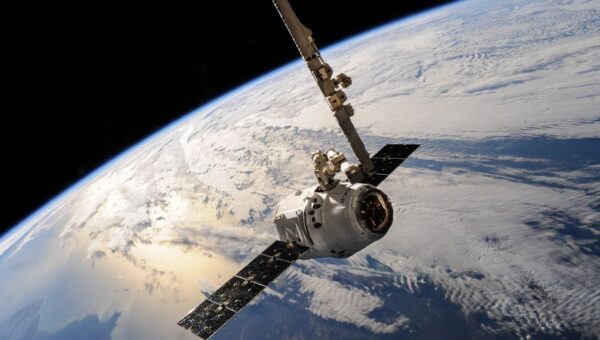
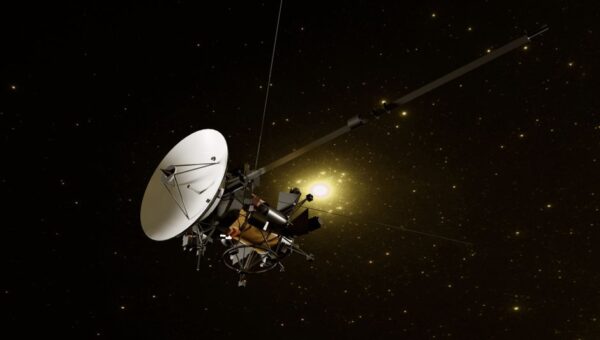
In 2026, humanity stands at the dawn of intergalactic travel, with advancements in antimatter propulsion and quantum navigation promising voyages beyond the Milky Way.
Space exploration and astronomy and cosmic discoveries
In 2026, humanity stands at the dawn of intergalactic travel, with advancements in antimatter propulsion and quantum navigation promising voyages beyond the Milky Way.
In 2026, understanding space weather is crucial as it affects satellites, power grids, and communication systems. Learn about solar flares, geomagnetic storms, and coronal mass ejections, and their impact on Earth.
In 2026, advancements in technology allow astronomers to explore the mysteries of chameleon stars, whose unpredictable brightness changes challenge our understanding of the cosmos.
In 2026, sustainable lunar habitats are becoming a reality through international cooperation, 3D-printed structures, and harnessing lunar resources like water and solar energy.
2026 is a landmark year for understanding galaxy mergers, revealing their role in star formation, black hole dynamics, and galaxy morphology.
Harnessing solar winds with cosmic sailing offers a revolutionary, sustainable way to explore the solar system, set to redefine space travel in 2026.
In 2026, astronomers focus on the mysteries of nebulae, the cosmic nurseries where stars are born, using advanced telescopes and spectroscopic techniques to unveil their secrets.
Quantum communication is poised to revolutionize space exploration by enabling instantaneous data transfer across vast distances, overcoming traditional limits.
Dark matter remains one of the universe’s most tantalizing mysteries. In 2026, scientific advancements and global collaborations are bringing us closer to uncovering its secrets.
2026 is a breakthrough year in exoplanetary exploration, with next-generation telescopes mapping diverse worlds and citizen scientists joining the search for extraterrestrial life.