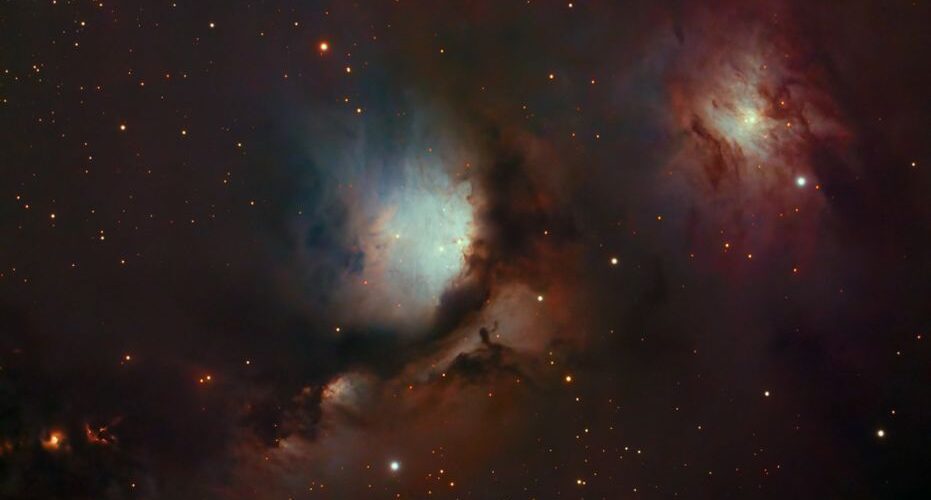
The Intriguing World of Binary Stars
Binary star systems have long captured the imagination of astronomers and stargazers alike. These cosmic duos, where two stars orbit a common center of mass, offer a fascinating glimpse into the complex dynamics of stellar evolution. In 2026, with advancements in telescopic technology and computational modeling, our understanding of these stellar partners is reaching new heights.
Binary stars aren’t just a scientific curiosity—they play a crucial role in the universe. From influencing stellar formation theories to serving as a key in measuring cosmic distances, binary systems hold the keys to many astronomical puzzles. Let’s take a closer look at how these stellar partnerships are shaping the cosmos.
The Anatomy of Binary Systems
Binary stars come in various configurations, each offering unique insights into their evolutionary paths. Some systems, like the well-known Sirius, consist of a giant and a white dwarf, while others, known as contact binaries, share a common atmosphere. Recent studies in 2026 have identified new subcategories based on previously unobserved gravitational interactions and orbital resonances.
Technology has propelled the study of these systems forward. The James Webb Space Telescope, operational since 2022, has provided unprecedented infrared observations, revealing intricate details about the interactions and compositions of binary pairs. These observations have been crucial in understanding phenomena such as mass transfer and common-envelope phases.
Why Binary Stars Matter
One of the most significant contributions of binary star research is in the realm of stellar evolution. Binary interactions can significantly alter the life cycle of a star, leading to phenomena such as supernovae, gamma-ray bursts, and even the formation of exotic objects like neutron stars and black holes. By studying these systems, astronomers can test models of stellar evolution with high precision.
In terms of cosmic measurements, binary stars are invaluable. Astronomers use the predictable dance of these stars to calculate distances across the universe through methods like parallax and spectroscopic parallax. This role in cosmic cartography is crucial for mapping the vast expanses of our galaxy and beyond.
Technological Advances in Binary Star Research
The leap in our understanding of binary systems over the past few years can be attributed to several technological advancements. Ground-based observatories equipped with adaptive optics have minimized atmospheric distortion, allowing for sharper images. Furthermore, the increasing power of computational models has enabled simulations of binary interactions with unprecedented detail.
In 2026, astronomers are leveraging machine learning algorithms to sift through vast datasets gathered from space telescopes. These algorithms can identify subtle patterns and predict outcomes of star interactions, assisting astronomers in making more accurate predictions about future stellar behavior.
Recent Discoveries and Their Implications
One of the most exciting discoveries in 2026 involves the identification of a new type of binary system with unexpected orbital mechanics. This system, located in the constellation Auriga, exhibits an unusual gravitational dance that challenges existing theories. Researchers believe this could provide new insights into the effects of gravitational waves within binary systems, a phenomenon previously thought to be restricted to more massive objects.
Another intriguing discovery involves a binary system where both stars are in the late stages of their life cycle. The dynamics of this pair are providing fresh data on how stars shed mass and transfer angular momentum, enriching our understanding of phenomena like novae and type Ia supernovae.
Practical Takeaway for Stargazers
For those keen to observe binary stars, 2026 is an exciting time. With new star maps and apps leveraging augmented reality, amateur astronomers can easily locate and identify binary systems in the night sky. Whether through a telescope or even binoculars, observing these stellar partnerships can offer a tangible connection to the dynamic processes shaping our universe.
So next time you find yourself under a clear, starry sky, take a moment to gaze at these stellar neighbors. You might just be witnessing the cosmic dance of a binary star system—a dance that tells the story of the universe itself.