The Pulsar Phenomenon: Neutron Stars in a Spin
It’s hard to believe that something barely 20 kilometers across can impact our understanding of the universe so profoundly. Pulsars, the rapidly spinning remnants of massive stars, serve as cosmic lighthouses whose precise beams of radiation sweep across the cosmos with clockwork regularity. These fascinating objects have been on the radar of astronomers since their discovery in 1967, but it’s in 2026 that we are beginning to comprehend their full potential.
Pulsars as Cosmic Laboratories
Pulsars are no longer just intriguing phenomena to be observed from afar. In recent years, they have transformed into vital tools for understanding the fabric of space-time. The high precision of their pulses allows astronomers to detect subtle shifts in their frequency, potentially caused by gravitational waves rippling through space. This turns pulsars into natural detectors, helping us probe the existence of these elusive ripples predicted by Einstein.
Gravitational Waves: Pulsars’ Role in Detection
In 2026, the international pulsar timing array projects have made significant strides. By timing millisecond pulsars distributed throughout our galaxy, scientists are fine-tuning our ability to detect gravitational waves from supermassive black hole mergers, offering insights into events occurring billions of light-years away. These findings are not only validating our understanding of general relativity but also opening up new chapters in our cosmic history books.
Pulsars and the Search for Exoplanets
Interestingly, pulsars have also become unlikely candidates in the hunt for exoplanets. Their regular pulse intervals can be disrupted by the gravitational pull of orbiting planets. In 1992, the first exoplanets were discovered around the pulsar PSR B1257+12. Fast forward to 2026, and the search has become more refined. New techniques are uncovering smaller, Earth-like exoplanets, expanding our knowledge of planetary systems beyond our solar neighborhood.
The Magnetar Mystery
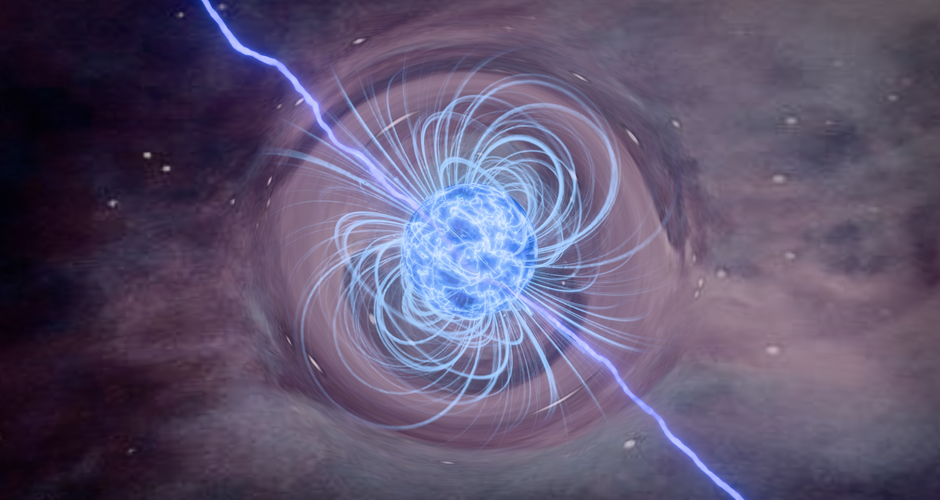
While most pulsars are celebrated for their stability, a rare subclass known as magnetars challenge this notion. These neutron stars have magnetic fields a thousand times stronger than typical pulsars. In 2026, astronomers are using advanced telescopes and satellite observatories to delve into the enigmatic nature of these celestial powerhouses. Recent studies suggest that magnetar outbursts might help us understand the elusive phenomenon of fast radio bursts (FRBs), which are among the most energetic events in the universe.
Practical Takeaway: The Cosmic Significance of Pulsars
Pulsars may seem like just another fascinating astronomical curiosity, but their implications stretch far beyond. From helping us detect gravitational waves to hosting complex exoplanetary systems, these spinning neutron stars are key to unlocking many of the universe’s secrets. As we continue to unravel the mysteries of pulsars, we edge closer to answering some of the most profound questions about the cosmos—and our place within it.