10 Astounding Facts About the Milky Way Galaxy
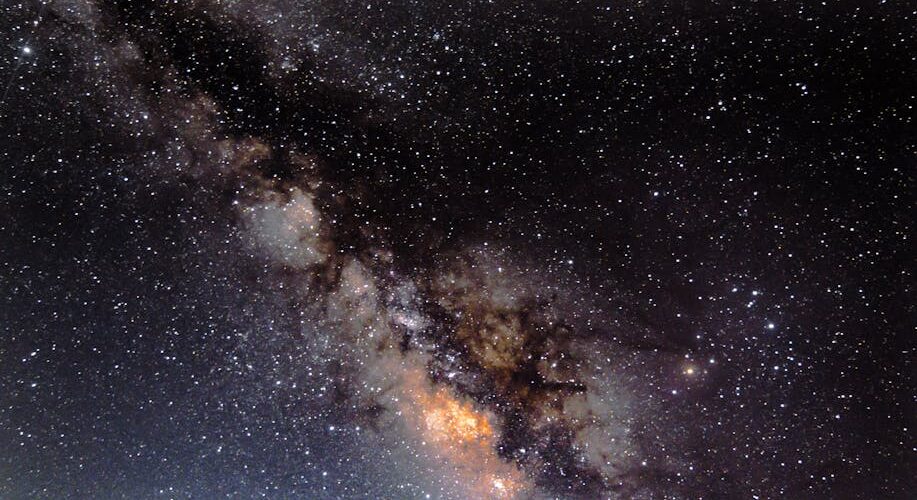
The Milky Way Galaxy, our cosmic home, is a fascinating, mysterious, and awe-inspiring part of the universe. Stretching across the night sky, it holds secrets and wonders that have intrigued astronomers and stargazers for centuries. As we delve deeper into its mysteries, we continue to uncover astonishing facts that reshape our understanding of the cosmos. Here are ten astounding facts about the Milky Way that will leave you marveling at the vastness and complexity of our galactic neighborhood.
The Immense Scale of the Milky Way
Our galaxy is a staggering expanse, measuring about 100,000 light-years in diameter. To put that in perspective, if you were to travel at the speed of light, it would take you 100,000 years to cross from one side of the Milky Way to the other. It contains an estimated 100 to 400 billion stars, each potentially hosting planets, some of which could harbor life. The immense scale is not just physical; it is also home to a dynamic ecosystem of interstellar clouds, cosmic dust, and dark matter, all contributing to its complex structure.
Our Galactic Center: A Supermassive Black Hole
At the heart of the Milky Way lies Sagittarius A*, a massive supermassive black hole with a mass equivalent to about 4 million suns. This invisible giant exerts such a gravitational pull that it influences the orbits of stars and gas clouds within thousands of light-years. Recent observations using the Event Horizon Telescope have provided the first-ever images of the region surrounding Sagittarius A*, offering unprecedented insights into its nature and behavior.
A Rotating Wonder
The Milky Way is not a static entity; it’s constantly in motion. The galaxy rotates around its center, with stars near the core completing an orbit in about 200 million years. Despite this incredible rotation speed, our solar system takes approximately 230 million years to complete a single orbit around the galactic center. This rotation not only shapes the structure of the galaxy but also influences the formation and evolution of its stellar populations.
The Galactic Halo: A Stellar Graveyard
Surrounding the Milky Way is a vast halo of stars, globular clusters, and dark matter. This halo is not just an empty expanse; it is a stellar graveyard, home to the remnants of ancient stars and smaller galaxies that the Milky Way has cannibalized over billions of years. Studies of these ancient stars provide clues about the early history of our galaxy and the universe itself.
Home to the Unknown: Dark Matter
An intriguing aspect of the Milky Way is its large amount of dark matter, an invisible substance that makes up about 90% of the galaxy’s mass. This mysterious matter does not emit, absorb, or reflect light, making it undetectable by traditional telescopes. Yet, its gravitational influence is evident in the rotation of the galaxy and the motion of stars within it. Understanding dark matter remains one of the biggest challenges and most exciting pursuits in modern astrophysics.
The Spiral Arms: A Celestial Dance
The Milky Way is a barred spiral galaxy, featuring distinct spiral arms radiating from its center. These arms, filled with stars, gas, and dust, are sites of intense star formation, often referred to as stellar nurseries. The Orion Arm, a minor spiral arm where our solar system resides, is one among these magnificent structures. The dance of the spiral arms, driven by gravitational forces and density waves, is a testament to the dynamic nature of our galaxy.
A Galactic Collision Course
In about 4.5 billion years, the Milky Way is expected to collide with the Andromeda Galaxy, our nearest spiral neighbor. This galactic encounter will lead to a spectacular merger, reshaping both galaxies into a new elliptical galaxy. While such collisions are common in the universe and often result in intense star formation, the vast distances between stars mean that direct stellar collisions are unlikely. The anticipation of this future event provides a glimpse into the ever-changing nature of the cosmos.
The Galactic Habitable Zone
Just as Earth has a habitable zone, the Milky Way has regions where conditions are more favorable for life. This ‘galactic habitable zone’ is located between the outer reaches and the dense, hazardous core of the galaxy. In this zone, there is a balanced mix of heavy elements needed for planet formation and a reduced risk of deadly cosmic events, such as supernovae, fostering environments where life might flourish.
The Cosmic Tapestry: Interstellar Medium
Between the stars lies the interstellar medium, a cosmic tapestry made up of gas and dust. This medium plays a crucial role in the life cycle of stars, serving as the raw material for star formation and recycling elements forged in stellar furnaces. The diversity and complexity of the interstellar medium contribute to the rich fabric of the Milky Way, influencing everything from the appearance of the night sky to the chemical composition of planets.
Our Place in the Universe
While the Milky Way is just one of over two trillion galaxies in the observable universe, it is uniquely ours. As we continue to explore and understand our galactic home, we gain insights into the broader universe and our place within it. The study of the Milky Way not only deepens our understanding of the cosmos but also inspires a sense of wonder and connection to the vast universe we inhabit.
Practical Takeaway: Our understanding of the Milky Way is constantly evolving, with new discoveries challenging and expanding our knowledge. For stargazers and astronomers alike, keeping up with these advancements offers a richer appreciation of the universe and our place in it. Consider visiting an observatory or following space agencies’ latest missions to experience the majesty of our galaxy firsthand.