Top 10 Cosmic Phenomena You Can See with the Naked Eye
Stargazing has been a favorite pastime for centuries, offering a glimpse into the vastness of the universe right from our backyards. With the advances in technology, it’s easy to forget that some of the most breathtaking cosmic phenomena can be observed without any equipment. Here, we’ll take a closer look at ten celestial wonders you can marvel at with just your eyes.
The Enigmatic Aurora Borealis
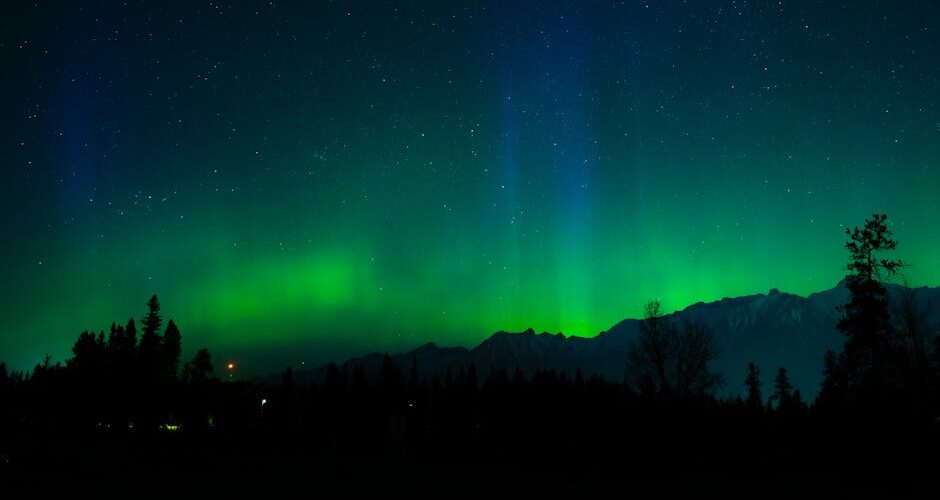
The Aurora Borealis, also known as the Northern Lights, is perhaps the most famous of the sky’s spectacles. These ethereal lights dance across the polar skies in vibrant greens, pinks, and purples, caused by the collision of solar wind particles with Earth’s magnetic field. The best places to catch this phenomenon are in the northern parts of countries such as Norway, Canada, and Iceland, especially during the months of September to March.
Glimpsing the Milky Way Galaxy
On a clear, dark night, away from city lights, the Milky Way reveals itself as a milky band stretching across the sky. This is our home galaxy, a sprawling collection of stars, dust, and gas. The best time to view the Milky Way is during the warmer months, from March to October, when the galaxy’s core is visible. Locations like Death Valley in the USA and Tenerife in Spain offer spectacular views.
Witnessing a Meteor Shower
Meteor showers are a thrilling sight to behold. These occur when Earth’s orbit crosses the debris trail of a comet, resulting in brilliant streaks of light as the debris burns up in our atmosphere. Notable meteor showers include the Perseids in August and the Geminids in December. For the best experience, find a dark spot and lie back to watch these natural fireworks.
The Majestic Full Moon
The full moon is an event that never fails to captivate. Each month, it illuminates the night sky, casting a glow that has inspired countless tales and traditions. The moon’s beauty can be enhanced by its position in the sky; for instance, the “supermoon” occurs when the moon is closest to Earth in its orbit, appearing larger and brighter.
Spotting the Planets
Several planets in our solar system can be seen with the naked eye, including Venus, Mars, Jupiter, and Saturn. Venus is often visible just before sunrise or after sunset, earning it the name “the Morning Star” or “the Evening Star.” Jupiter and Saturn can be distinguished by their brightness, and with a bit of patience, you might even spot the rings of Saturn as a faint outline.
The Eclipses: Solar and Lunar
Eclipses offer some of the most dramatic celestial events. A solar eclipse occurs when the moon passes between Earth and the sun, temporarily blocking the sun’s light. During a total solar eclipse, day turns into night, albeit briefly. In contrast, a lunar eclipse happens when Earth casts its shadow on a full moon, often giving it a reddish hue, known as a “Blood Moon.” Both events are worth the anticipation and planning to experience.
Constellations: Stories in the Stars
Constellations have guided sailors, marked the seasons, and inspired myths across cultures. Familiar patterns like Orion, the hunter, and Ursa Major, home to the Big Dipper, provide a celestial map in the sky. Learning to identify these star patterns can be a fun and educational activity, connecting us to ancient traditions and the night sky’s timeless beauty.
The Zodiacal Light
Less well-known but equally fascinating, the zodiacal light is a faint, triangular glow visible shortly after sunset or before sunrise. This glow is sunlight scattered by interplanetary dust particles along the plane of the solar system. Best seen in spring and autumn, this phenomenon is often observed in locations with minimal light pollution, such as the Atacama Desert in Chile.
The Andromeda Galaxy
Our closest galactic neighbor, the Andromeda Galaxy, can be seen as a faint smudge in the night sky under optimal conditions. It’s the furthest object visible to the naked eye, located over 2.5 million light-years away. The autumn months offer the best chance to view Andromeda, especially if you’re in the northern hemisphere.
Iridium Flares: Catching Satellites
Finally, adding a touch of modernity to our list, Iridium flares are bright flashes in the sky caused by the sunlight reflecting off the solar panels of Iridium communication satellites. These brief but brilliant glints last only a few seconds but are remarkable to witness. Various apps and websites can predict their appearances, allowing you to plan ahead.
From the elegance of the Aurora Borealis to the mystique of the Andromeda Galaxy, there’s a treasure trove of cosmic phenomena awaiting your gaze. Next time you’re outside on a clear night, take a moment to look up and ponder the vast universe that stretches above us.
Practical Takeaway: To enhance your stargazing experience, find a spot with minimal light pollution, perhaps during a camping trip or a special visit to a designated dark-sky area. Give your eyes time to adjust to the dark, and consult online resources or apps for the best viewing times and locations for these phenomena. Happy stargazing!