What We Thought We Knew: The Number of Saturn’s Moons
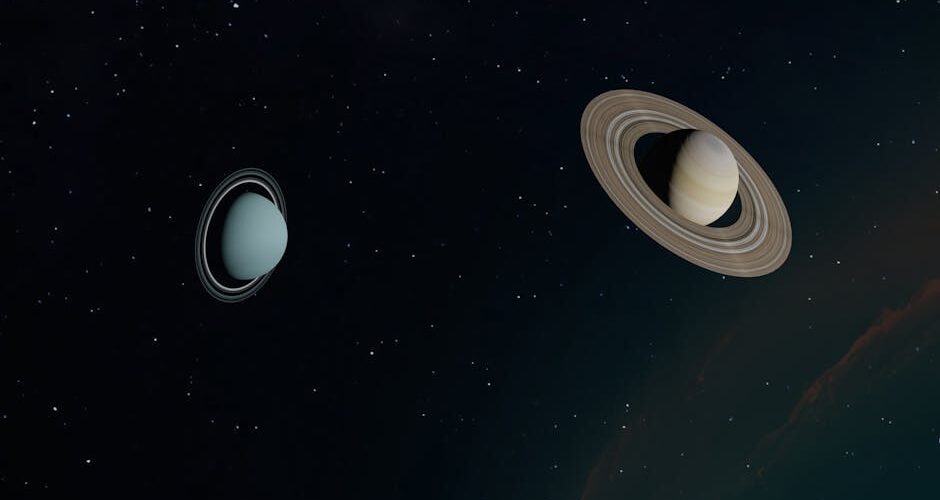
For years, the count of Saturn’s moons seemed to increase incessantly, leaving many of us struggling to keep up. The current tally, as of 2026, stands at a staggering 153 confirmed moons. These celestial companions range from the gigantic Titan to tiny moonlets barely a kilometer across. Saturn’s gravitational pull skillfully captures these varied moons, creating a fascinatingly crowded orbit. It’s a vivid reminder of the incredible complexity and diversity of our solar system.
The Gigantic and Enigmatic Titan
Titan, Saturn’s largest moon, is a world unto itself. Bigger than Mercury, Titan boasts a dense atmosphere composed primarily of nitrogen, with a touch of methane giving it a unique hazy orange appearance. The Cassini-Huygens mission, which famously landed a probe on Titan’s surface in 2005, revealed lakes and rivers of liquid methane and ethane. These findings deeply intrigue scientists as they speculate about the possibility of life in such alien conditions. Titan’s thick atmosphere and surface liquid make it one of the most Earth-like bodies in the solar system, despite its frigid temperatures.
Enceladus: The Icy Moon with a Watery Secret
Enceladus, a small and icy moon, has captured the imagination of astronomers since the Cassini spacecraft detected water-rich plumes venting from its south pole. These plumes are believed to originate from a subsurface ocean hidden beneath its icy crust, making Enceladus a prime candidate in the search for extraterrestrial life. Analyzing the composition of these plumes has revealed organic compounds, hinting at the tantalizing possibility of microbial life lurking beneath its frozen exterior.
A Shepherd in the Rings: Pan
Among the more peculiar moons of Saturn, Pan stands out due to its distinct shape, often likened to a ravioli. This little moon, just 35 kilometers across, resides within the Encke Gap of Saturn’s A ring. Pan plays the role of a ‘shepherd’, maintaining the gap’s structure by herding ring particles with its gravitational influence. Its unusual shape is believed to result from the accumulation of ring material, forming a pronounced equatorial ridge that adds to its ravioli-like appearance.
Mimas: The ‘Death Star’ Moon
Mimas is often whimsically referred to as the ‘Death Star’ moon, thanks to its resemblance to the infamous space station from the Star Wars franchise. The comparison arises from the large Herschel Crater that dominates its surface, measuring 130 kilometers in diameter. This crater is nearly a third the diameter of Mimas itself. Despite its fearsome appearance, Mimas is a relatively inert world, with minimal geological activity and a surface pockmarked by numerous smaller craters.
Iapetus: The Two-Faced Moon
Iapetus presents a striking visual contrast, with one hemisphere as dark as coal and the other as bright as snow. This distinctive two-tone appearance has puzzled astronomers for centuries. Recent studies suggest that the dark material coating one side of Iapetus likely originates from Phoebe, another of Saturn’s moons. As Iapetus orbits Saturn, it sweeps up this dark material, creating its unique appearance. This moon’s equatorial ridge, which runs along the center of the dark hemisphere, adds another layer to its strange and captivating nature.
Enigmatic Orbit of Hyperion
Hyperion, one of Saturn’s more bizarre moons, boasts a chaotic rotation unlike any other in the solar system. Its irregular shape and sponge-like surface texture contribute to its unpredictability. Hyperion rotates in such a way that predicting its orientation at any given moment is nearly impossible. Its unique dynamics result from its gravitational interactions with Saturn and other nearby moons, making it a fascinating object of study for those interested in gravitational mechanics.
The Mythical Albedo of Dione
Dione, while not the most well-known of Saturn’s moons, offers its own set of intriguing features. Among them is its remarkable albedo, reflecting a significant amount of sunlight due to its icy surface. The moon’s bright surface is marked with wispy streaks, believed to be icy cliffs caused by ancient tectonic activity. Dione’s subdued yet beautiful scarring tells a story of past geological events, reminding us that even the lesser-known moons carry tales of cosmic drama.
Rhea: Saturn’s Second-Largest Moon
Rhea, Saturn’s second-largest moon, has piqued interest due to its potential ring system. Observations suggest that Rhea may be surrounded by a set of faint rings, making it the only moon in the solar system with such a feature. While these rings have yet to be conclusively confirmed, the possibility alone adds a layer of mystery to this otherwise serene celestial body. Rhea’s heavily cratered surface and thin atmosphere continue to be subjects of ongoing research.
The Tiny Yet Mighty Moonlets
Scattered among Saturn’s larger moons are numerous tiny moonlets, some of which barely span a kilometer in diameter. These diminutive objects might seem insignificant, but they play a crucial role in shaping the planet’s rings. The gravitational influence of these moonlets contributes to the formation of ring gaps and edges, adding complexity to the structure of Saturn’s iconic rings. Each moonlet, though small, is a vital piece of the planet’s dynamic ring system.
Takeaway: Saturn’s Moons and Their Cosmic Ballet
Saturn’s moons, from the colossal Titan to the minuscule moonlets, weave a fascinating tapestry around the ringed planet. Each one, with its unique characteristics and stories, contributes to the cosmic ballet that is Saturn’s satellite system. These moons offer valuable insights into planetary formation, the potential for life beyond Earth, and the intricate gravitational interactions within our solar system. As we continue to explore and study them, they promise to reveal even more secrets that stretch the boundaries of our knowledge and imagination.