Why the Exploration of Europa Matters More Than You Think
Just a little over 390 million miles away from Earth lies Europa, one of Jupiter’s many moons. Though smaller than our own moon, Europa has captured the curiosity of scientists and dreamers alike. But why is this icy world more than just another celestial body in our solar system? Here’s why the exploration of Europa should be on everyone’s radar.
Europa: A Unique Ice-Covered World
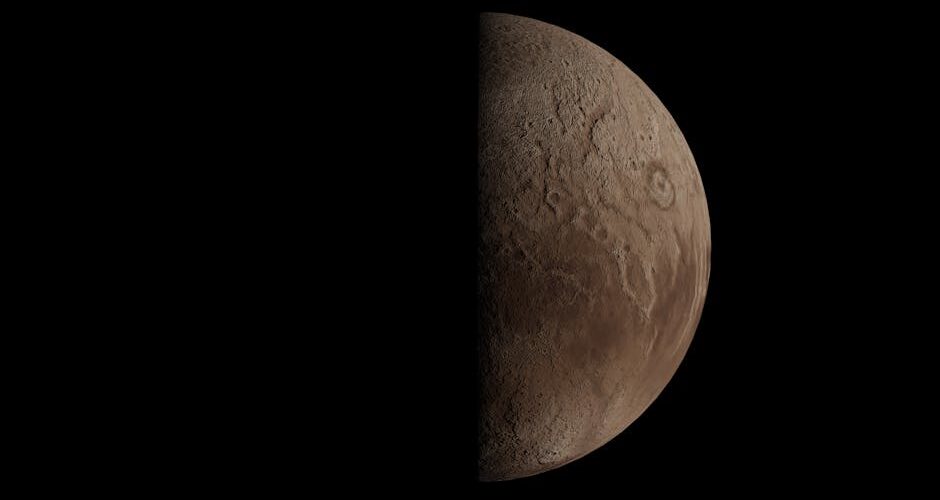
Europa is no ordinary moon. It is primarily made of silicate rock and has a water-ice crust, making it similar yet intriguingly different from Earth. Underneath its icy shell, scientists believe there lies a vast ocean of liquid water. This subsurface ocean, kept warm by tidal flexing from Jupiter’s gravitational pull, could be home to extraterrestrial life.
The possibility of life exists because Europa’s ocean might contain more than twice the water found on Earth. This water, combined with chemical nutrients that could seep from its rocky mantle, creates an environment akin to Earth’s hydrothermal vents—habitats known for supporting diverse life forms despite their extreme conditions.
Technology and Missions: Breaking New Ground
Several missions are currently in the works to explore Europa. NASA’s Europa Clipper, scheduled to launch in late 2026, will fly by the moon multiple times. It is equipped with high-resolution imaging systems, ice-penetrating radar, and magnetometers, specifically designed to study the thickness of Europa’s ice shell, its subsurface ocean, and its potential for life.
Closer to the end of the decade, the European Space Agency plans to launch JUICE (JUpiter ICy moons Explorer), which will also investigate Europa as well as Ganymede and Callisto, two other moons of Jupiter. These missions aim to answer fundamental questions about the potential for life elsewhere in the solar system.
The Search for Life Beyond Earth
The hunt for extraterrestrial life is one of the most compelling reasons for Europa’s exploration. The moon’s subsurface ocean could harbor microbial life forms, similar to those found in extreme environments on Earth. Discovering life on Europa would revolutionize our understanding of biology, suggesting that life might be a common occurrence in the universe.
If Europa hosts life, it could take forms we have never imagined, challenging our understanding of what life is and what environments can sustain it. The implications are profound, affecting not only science but philosophy, religion, and our place in the cosmos.
Europa and Earth’s Climate Puzzle
Interestingly, studying Europa might also give us insights into Earth’s past and future climate. The dynamics of ice-covered oceans on Europa can be analogous to Earth’s ice-covered poles. By understanding how Europa’s ice interacts with its ocean, scientists can develop better models for how Earth’s climate systems operate—offering potential strategies for climate change mitigation.
This cross-planetary study could also help us understand how life on Earth might adapt or evolve under extreme climate conditions, giving us clues about the resilience of life and the adaptability of ecosystems.
Inspiring Future Generations
The exploration of Europa is not just a scientific endeavor; it is a cultural and educational opportunity. As missions to Europa capture public imagination, they inspire future generations of scientists, engineers, and explorers. The story of a tiny moon with an ocean under its ice could become a narrative that encourages young people to pursue careers in science and technology.
Moreover, the exploration of Europa serves as a unifying endeavor, reminding us of the power of international cooperation in space exploration. It compels us to look beyond our planet and consider the broader universe, fostering a sense of shared humanity navigating the vastness of space together.
Your Role in the Cosmic Journey
So, why does the exploration of Europa matter more than you think? It’s about more than finding potential life; it’s about expanding our horizons. The exploration pushes technological boundaries, provides insights into Earth’s climate, and inspires future generations. And while you may not be boarding a spacecraft to Europa anytime soon, your curiosity and support for these missions are crucial. Engaging with these cosmic endeavors, sharing knowledge, and fostering interest are practical ways to contribute to this groundbreaking journey.