The Cosmic Neighborhood: Understanding Our Stellar Community
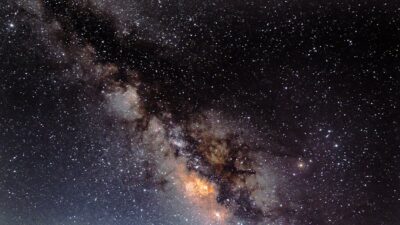
As we glance into the night sky, we see a tapestry woven with stars, each a beacon of cosmic history. Our solar system, with its planets, moons, and the sun, is just a tiny speck in the vast Milky Way galaxy. But what lies beyond this familiar neighborhood? The universe outside our solar system is a realm filled with wonders that have intrigued astronomers for generations.
In our hunt for knowledge, astronomers have zeroed in on our nearest stellar neighbors. The Alpha Centauri system, a mere 4.37 light-years away, is home to three stars: Alpha Centauri A, Alpha Centauri B, and Proxima Centauri—the latter being the closest known star to the solar system. Spectroscopic studies have revealed exoplanets orbiting these stars, with Proxima Centauri b sparking particular interest due to its location in the habitable zone.
Exoplanets: The Hunt for Other Worlds
The search for exoplanets has been one of the most thrilling aspects of modern astronomy. Since the first confirmed detection in 1992, the count of discovered exoplanets has surged past 5,400. These planets vary in size, composition, and orbit, revealing a dazzling variety of worlds.
One of the most exciting finds is the TRAPPIST-1 system, located about 39 light-years away. This system boasts seven Earth-sized planets, three of which reside in the habitable zone. The potential for liquid water on these planets makes them prime targets for future exploration. With the advent of advanced telescopes such as the James Webb Space Telescope, scientists are on the brink of analyzing the atmospheres of these distant worlds to search for biosignatures.
Interstellar Travel: Bridging the Cosmic Gulf
As humans, our dreams of reaching the stars have been fueled by both science fiction and significant technological advancements. While interstellar travel remains within the realm of future technology, current research is making strides towards one day bridging the immense distances between us and other star systems.
Projects like Breakthrough Starshot are at the forefront of these efforts. The initiative aims to send tiny, light-propelled nanocrafts to Alpha Centauri, traveling at speeds up to 20% of the speed of light. If successful, such a mission could reach our nearest stellar neighbors in just over 20 years. These ambitious projects capture the imagination, but they also underscore the challenges of interstellar travel, from propulsion technologies to communication across light-years.
The Mysteries of Interstellar Space
Beyond the gravitational influence of our sun lies the enigmatic expanse of interstellar space. It is a region marked by cosmic rays, interstellar dust, and the mysterious presence of dark matter. The Voyager 1 and 2 spacecraft, launched in 1977, have provided humanity with its first foray into this unexplored territory. As of 2026, Voyager 1 is over 23 billion kilometers from Earth, sending back invaluable data about the heliosphere’s boundary and the interstellar medium.
These probes have already uncovered surprising facts, such as the presence of a hydrogen wall at the edge of our solar system, where solar winds meet the interstellar medium. As we continue to gather information from these pioneering spacecraft, we enhance our understanding of the cosmic environment surrounding us.
Are We Alone? The Search for Extraterrestrial Life
The question of whether we are alone in the universe has captivated humanity for centuries. With billions of stars in the Milky Way galaxy alone, the potential for life elsewhere is tantalizing. Recent advancements in detecting exoplanets and analyzing their atmospheres have brought us closer to finding evidence of life beyond Earth.
The discovery of phosphine in the atmosphere of Venus and the potential biosignatures on moons like Europa and Enceladus hint at the possibilities of life in our own solar system. However, the search extends far beyond, with SETI (Search for Extraterrestrial Intelligence) initiatives scanning the skies for signals from intelligent civilizations. As technology progresses, the hope of answering this cosmic question seems ever more within reach.
Practical Takeaway: The Boundless Horizon of Exploration
As we cast our gaze beyond our solar system, we are reminded of the boundless opportunities for discovery and understanding. Each new discovery, whether an exoplanet resembling Earth or the detection of unexplained phenomena in interstellar space, expands our comprehension of the universe.
The journey is as significant as the destination. As we continue to explore the cosmos, we not only seek answers to age-old questions but also forge a path for future generations to follow. The next frontier beckons, and with it, the promise of uncovering the secrets of the universe.